Kusa Jātaka
Kusa Jātaka
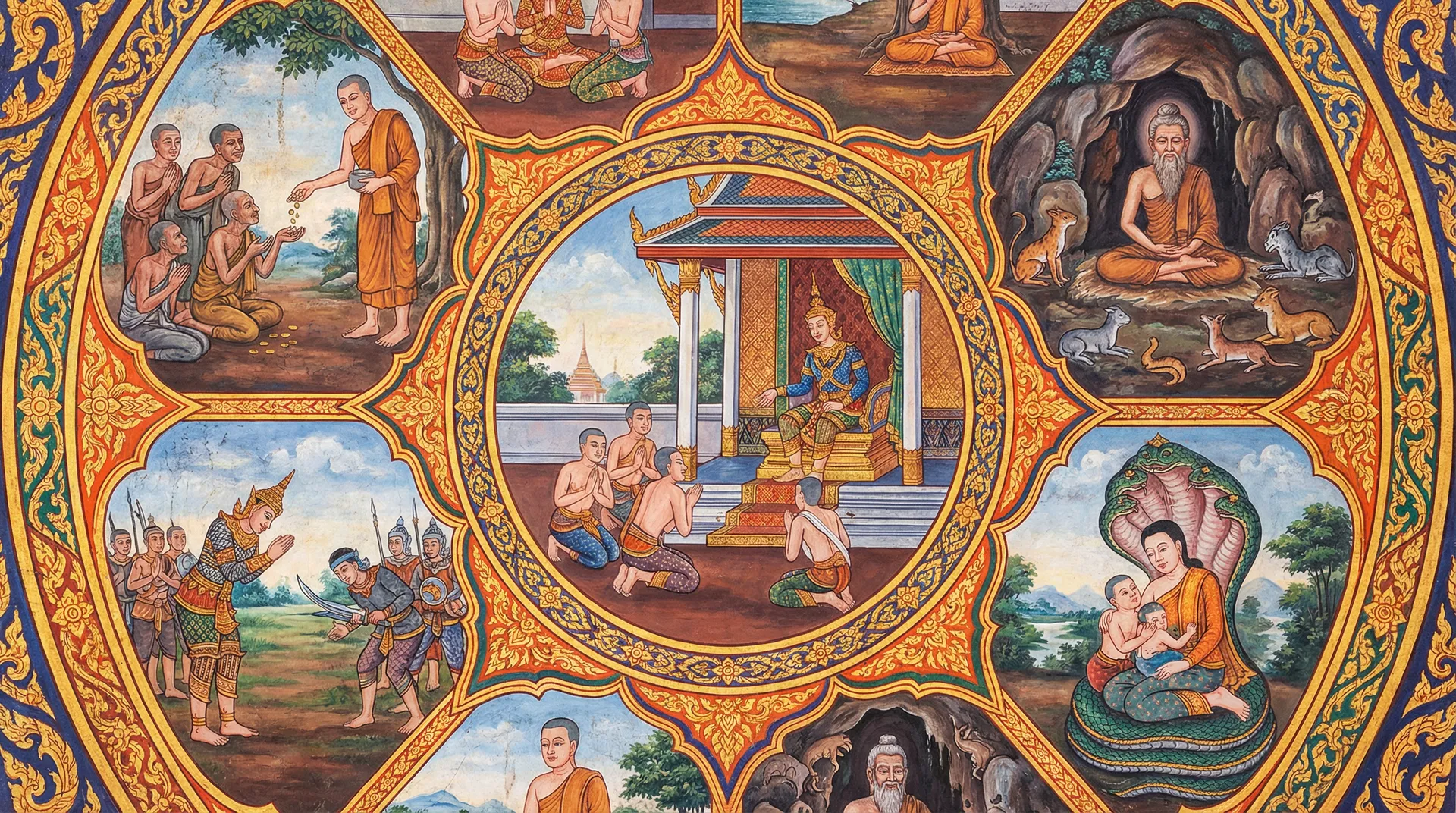
In the ancient city of Kusavati, ruled a king named Okkaka. His queen, Padmavati, was renowned for her beauty and virtue. However, the king was deeply infatuated with another woman, his younger wife, who, driven by ambition and jealousy, plotted to have her own son ascend the throne. She secretly poisoned the king's mind against Queen Padmavati and her son, Prince Kusa, who was known for his noble character and wisdom. The scheming queen, through cunning words and fabricated evidence, convinced the king that Queen Padmavati and Prince Kusa were plotting against him. In his misguided anger and suspicion, King Okkaka banished his devoted queen and beloved son from the kingdom. Cast out into the wilderness, Queen Padmavati and Prince Kusa faced immense hardship. The prince, though young, showed remarkable resilience and compassion. He protected his mother and ensured they had the basic necessities for survival, using his intelligence and resourcefulness. They wandered from place to place, often facing hunger and peril. Meanwhile, back in Kusavati, the king's health began to decline rapidly. His paranoia and suspicion intensified, and he realized, too late, that he had been deceived by his younger wife. Her true nature, filled with malice and ambition, became evident as she grew bolder in her machinations to secure the throne for her own son. In his despair and regret, the king longed for his banished queen and son. He sent messengers far and wide, seeking any news of them. Prince Kusa, through his keen observation and fortunate encounters, learned of his father's plight and his mother's pure innocence. He decided that he must return to his kingdom not for revenge, but to restore justice and truth. He and his mother, guided by an unwavering sense of duty, made their way back towards Kusavati. Upon their arrival, they found the kingdom in turmoil. The younger queen's son, now a cruel and inept ruler, was leading the kingdom to ruin. Prince Kusa, with his mother by his side, presented himself at the royal court. He calmly recounted the truth of their banishment, exposing the deceit of the younger queen and her son. His eloquence, wisdom, and the undeniable purity of his intentions swayed the hearts of the assembled courtiers and the ailing king. King Okkaka, filled with remorse and overwhelmed by the truth, recognized his grave error. He publicly apologized to Queen Padmavati and Prince Kusa, acknowledging their virtue and his own folly. He then abdicated the throne, entrusting the future of the kingdom to his rightful heir, Prince Kusa. Prince Kusa, now king, ruled with the wisdom and compassion he had cultivated during his hardships. He ensured that justice prevailed, that the wicked were held accountable, and that the innocent were protected. He governed with fairness, remembering the suffering he and his mother had endured, and dedicated himself to the welfare of all his subjects. The kingdom of Kusavati, once threatened by deceit and ambition, flourished once more under the just and wise reign of King Kusa, a testament to the enduring power of truth, resilience, and unwavering righteousness.
The Kusa Jātaka teaches us about the devastating consequences of jealousy, ambition, and deceit, especially within families and royal courts. It highlights the importance of truth, resilience, and unwavering righteousness in the face of adversity. The story shows that even when wronged, returning with wisdom and compassion, rather than revenge, can lead to the restoration of justice and the well-being of a kingdom. It underscores the power of virtue to overcome evil.
— In-Article Ad —
💡ၶေႃႈသွၼ်
Truth, resilience, and righteousness will ultimately prevail over deceit and ambition.
ပႃႇရမီႇ: Patience (Khanti)
— Ad Space (728x90) —
ၸႃႇတၵဢၼ်ၼႃႈသူၼ်ၸႂ်
 262Tikanipāta
မ
မႁႃးသူ ပၼ ႇ ၵူၼ်းၼမ်ႉၵၼ်၊ ၵူၼ်းမႃးၵၼ်၊ ၵူၼ်းၵႃႉၵၼ်၊ ၵူၼ်းႁၵ်ႉၵၼ်၊ ၵူၼ်းပဵၼ်ၵၼ် ၼႂႂႈၵၢၼ်း ၵႃႉၵၼ် ၵႃႉ...
💡 ความดีที่ทำไว้ ย่อมส่งผลดีตอบแทนเสมอ ไม่ว่าจะเป็นในปัจจุบันหรืออนาคต การทำบุญทำทาน การช่วยเหลือผู้อื่น เป็นการสร้างบุญบารมีที่ยั่งยืน อันจะนำมาซึ่งความสุขความเจริญ และคุ้มครองเราจากภัยอันตรายต่างๆ
 390Chakkanipāta
Saddhanta Jataka
Saddhanta JatakaIn a thriving city known for its bustling marketplace and its scholarly pursuits, th...
💡 ความเมตตาและการเสียสละเพื่อช่วยเหลือผู้อื่น เป็นคุณธรรมอันยิ่งใหญ่ที่นำมาซึ่งความสุขและบุญกุศล
 211Dukanipāta
ဢ㇏ ဢ㇏ ဢ㇏ ဢ㇏ ဢ㇏ ဢ㇏
ၵ㇏ ဢ㇏ ဢ㇏ ဢ㇏ ဢ㇏ ဢ㇏ ဢ㇏ ဢ㇏ ဢ㇏ ဢ㇏ ဢ㇏ ဢ㇏ ဢ㇏ ဢ㇏ ဢ㇏ ဢ㇏ ဢ㇏ ဢ㇏ ဢ㇏ ဢ㇏ ဢ㇏ ဢ㇏ ဢ㇏ ဢ㇏ ဢ㇏ ဢ㇏ ဢ㇏ ဢ㇏ ဢ㇏ ဢ㇏ ဢ㇏ ဢ㇏ ဢ㇏ ဢ...
💡 ความพยายามในการสรรหาและสร้างสรรค์สิ่งที่ดีที่สุดอาจนำมาซึ่งความสำเร็จ แต่ก็ยังมีสิ่งที่เหนือกว่าที่ต้องเรียนรู้และยอมรับ
 141Ekanipāta
ၵုမ္ဘထာစၑၨာဒၵ
ၵုမ္ဘထာစၑၨာဒၵ ၵႂ်းၵႂ်း ဢၼ်ၔၵၔၵၔ ၵႂ်း ၵႂ်း ၵႂ်း ၵႂ်း ၵႂ်း ၵႂ်း ၵႂ်း ၵႂ်း ၵႂ်း ၵႂ်း ၵႂ်း ၵႂ်း ၵႂ်း ၵႂ်...
💡 การแก้ปัญหาที่ต้นเหตุ ด้วยปัญญาและความรอบคอบ ย่อมนำมาซึ่งผลลัพธ์ที่ดีและยั่งยืน
239Dukanipātaၵၸႊၵ႗ၵ႐ႊၵ႘
ၵႂၢၼ်း ၵႃ႘ ဢႃ႘ ၵႂၢၼ်း ဢႃ႘ ၵႃ႘ ဢႃ႘ ဢႃ႘ ဢႃ႘ ဢႃ႘ ၵႂၢၼ်း ၵႃ႘ ဢႃ႘ ဢႃ႘ ဢႃ႘ ဢႃ႘ ဢႃ႘ ဢႃ႘ ဢႃ႘ ဢႃ႘ ဢႃ႘ ဢႃ႘ ဢႃ႘...
💡 การให้ทานและการช่วยเหลือผู้อื่น เป็นสิ่งที่ประเสริฐกว่าการเก็บสมบัติไว้เพียงผู้เดียว
148EkanipātaMahasutasoma Jataka
Mahasutasoma JatakaIn the magnificent city of Indapatta, ruled a king named Pothila, whose reign was...
💡 ความรักที่แท้จริงนั้น ไม่ใช่เพียงแค่ความสุขสบาย แต่ยังรวมถึงความเสียสละและความอดทนด้วย
— Multiplex Ad —